
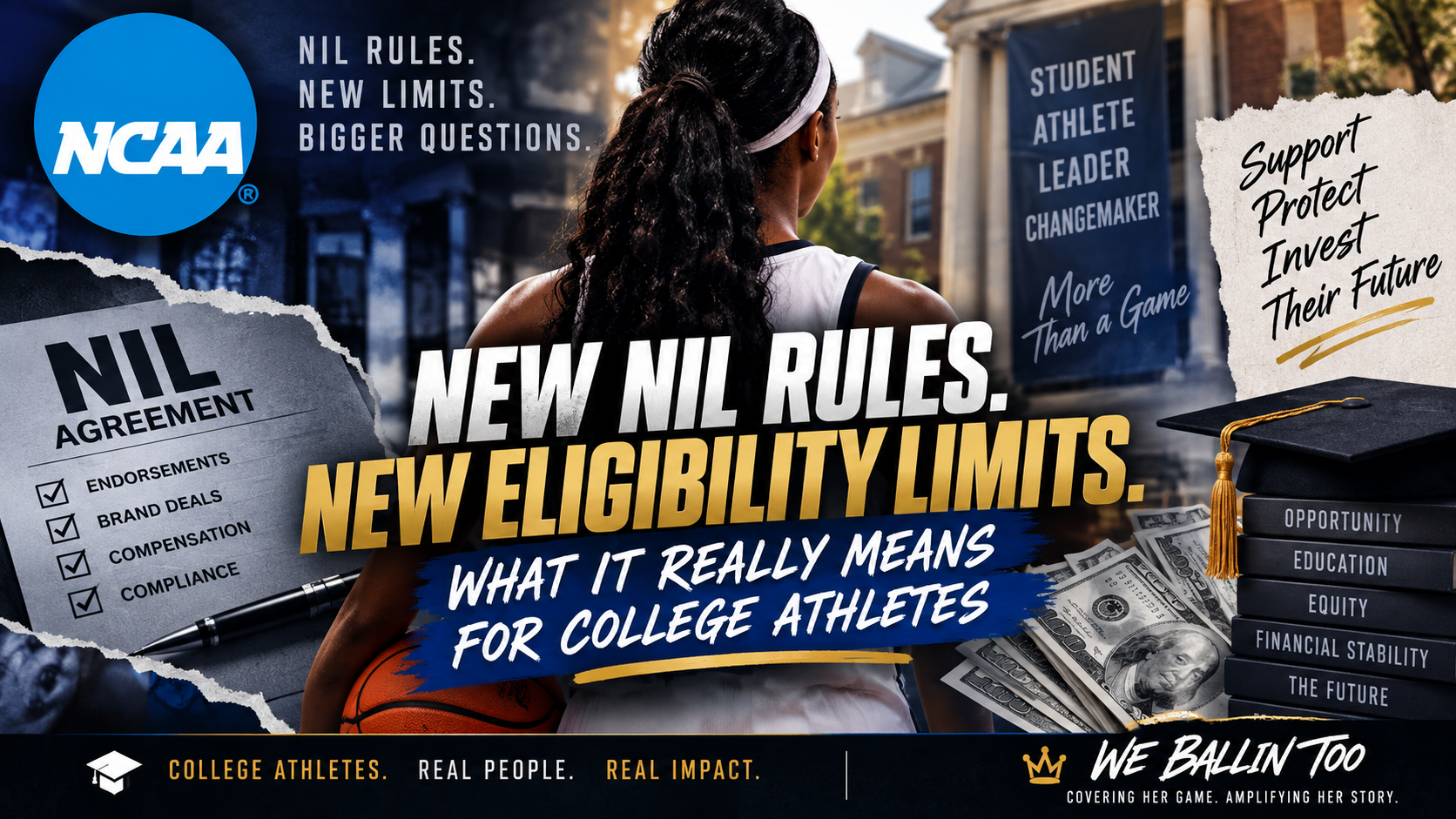
Are College Sports' New NIL and Eligibility Rules Taking Away Part of the Safety Net?
College athletics has changed dramatically in just a few years. But as new rules take effect, another question deserves attention.
College athletics has changed dramatically in just a few years. Athletes can now earn money from their name, image and likeness, and some Division I schools can directly compensate athletes under the House settlement framework.
On the surface, that sounds like progress.
But as new NIL regulations and eligibility rules take effect, another question deserves attention: Could some of the rules designed to bring "stability" to college sports actually create less stability for the athletes who need it most?
Under the current Division I NIL structure, third-party NIL agreements worth $600 or more must generally be reported through the NIL clearinghouse. Those deals are subject to review, and agreements involving people or organizations associated with a school must have a legitimate business purpose and compensation considered reasonable for the athlete's NIL value.
There is a reasonable purpose behind those requirements. College sports has spent years trying to distinguish legitimate endorsements from payments designed primarily to recruit athletes.
At the same time, additional rules and paperwork can be easier to navigate for athletes with agents, attorneys and strong financial support than for a teenager whose family has never dealt with contracts, taxes or NIL compliance.
That distinction matters.
For some college athletes, NIL money isn't simply spending money. It can help with transportation, food, family expenses or creating financial breathing room while pursuing a degree.
The eligibility rules are changing too.
Beginning fully with athletes first enrolling in fall 2027, Division I will move to a continuous five-year eligibility period. The clock begins with full-time college enrollment or the academic year following the athlete's 19th birthday, whichever occurs first. The system eliminates traditional athletic redshirts and many of the waiver categories athletes previously used to extend eligibility.
There is an important benefit: athletes are no longer restricted to only four seasons of competition within that window. In the right circumstances, a player could compete throughout the five-year period.
But there is another side.
The NCAA says the new system will no longer offer medical-hardship, extension-of-eligibility and season-of-competition waivers. The five-year clock generally keeps moving even when an athlete transfers, steps away or doesn't compete, with limited exceptions such as pregnancy, military service and official religious missions.
That could hit differently for different athletes.
A player from a financially comfortable family may have options when basketball doesn't go according to plan. Another athlete may be relying on a scholarship, housing, meals, NIL opportunities and college basketball as the bridge to a degree and a better financial future.
An injury or unexpected setback can therefore mean much more than losing a basketball season.
To be fair, other parts of the new system could expand opportunity. The House settlement removed sport-by-sport scholarship maximums for participating Division I programs and allows schools to offer scholarships up to their roster limits. It also opened the door for substantial direct financial benefits to athletes.
It's about who benefits most from the new system — and who has the resources to survive when something goes wrong.
So this isn't simply a story of athletes gaining or losing.
It's about who benefits most from the new system — and who has the resources to survive when something goes wrong.
College sports needed clearer rules.
But as those rules are rewritten, financial stability shouldn't only be considered from the perspective of universities and athletic departments.
The stability of the athletes themselves has to matter too.